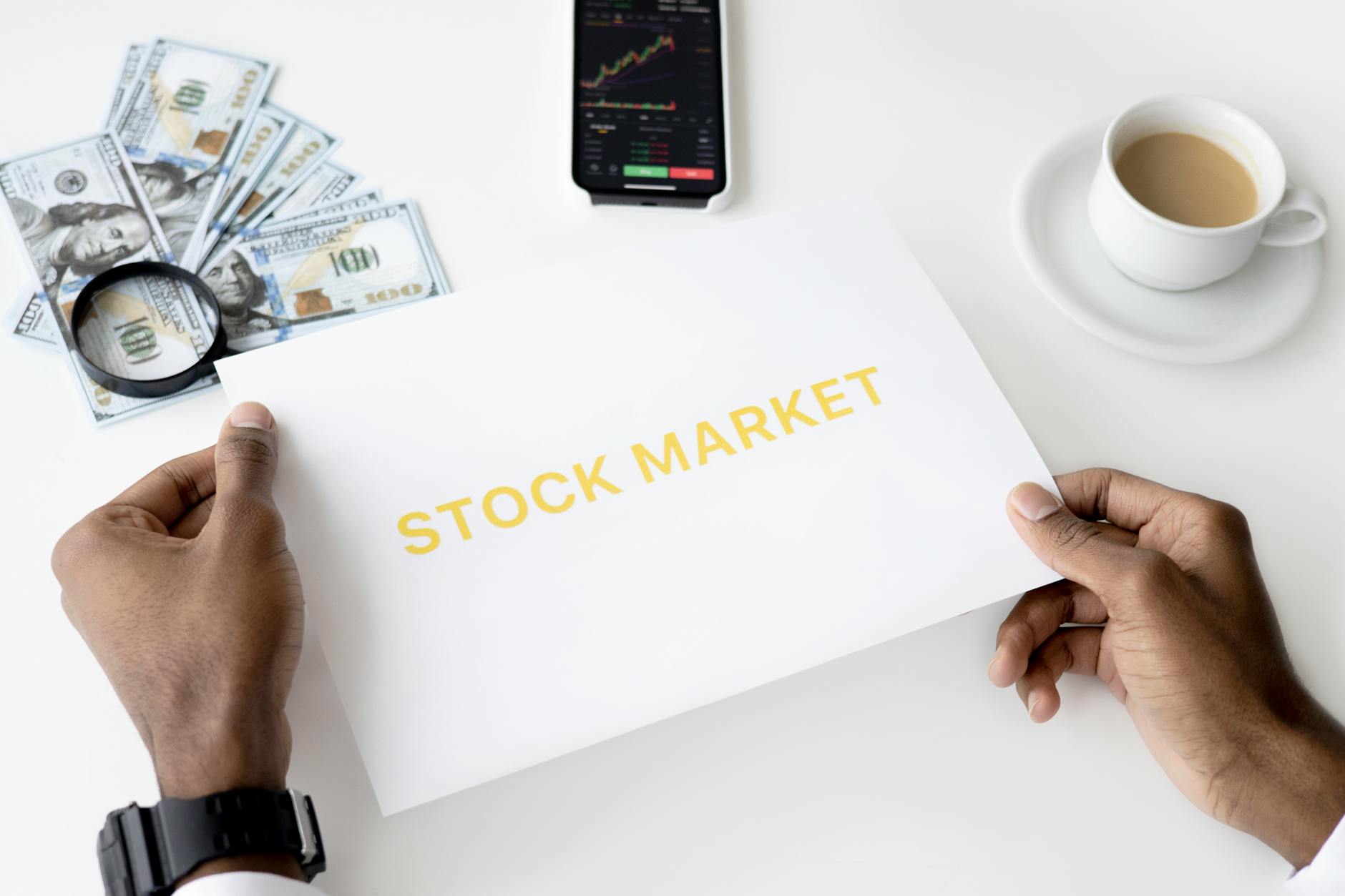
If you’re thinking that starting an investment journey with $100 will lead you to financial freedom, you’re likely setting yourself up for disappointment. The real question isn’t how to start investing with a hundred dollars, but how to avoid hemorrhaging that hundred in a market designed to drain the inexperienced.
Why Piling into Index Funds Isn’t Your Safe Haven
Most beginners believe that placing $100 into an index fund is the safest, smartest move. The common narrative suggests it’s a simple, low-risk way to dip your toes into the investment waters.
⚡ Advertiser Disclosure
📈 Best Investment Platforms for Beginners
Commission-free stocks, ETFs & crypto. Get a free stock.
Invest your spare change automatically. Start with $5.
Automated investing & retirement planning.
* FinanceFlare may earn a commission if you click links above. This does not affect our editorial independence.
Conventional wisdom purports that index funds offer diversification and steady growth, often parroting historical returns of 7% annually. Millions follow this advice, drawn by tales of compounding interest turning modest amounts into substantial savings over decades.
However, this wisdom ignores the systemic risks inherent in blindly following market trends. Index funds are subject to market volatility and systemic shocks that can significantly impact your investment, especially when you have limited capital.
The better strategy involves understanding that investing in index funds with only $100 exposes you to substantial opportunity costs—specifically, the chance to learn and engage more actively with market dynamics. Instead of passively investing, consider educational investments or trading simulations that hone your financial acumen without real monetary risk.
Even when you choose index funds, be wary of market timing and your emotional reactions to downturns. Studies show retail investors often sell low and buy high, driven by fear and greed.
Editor’s Note: Index funds are not the panacea for beginner investors; they often obscure the necessity for financial literacy.
Why High-Interest Savings Accounts Are a Mirage
Another common piece of advice is to stash your $100 in a high-interest savings account, purportedly to earn “risk-free” returns. Many believe this is the safest way to grow small sums while learning the ropes of personal finance.
The prevailing myth is that these accounts offer security and liquidity. With interest rates advertised to beat inflation, they seem a logical choice for those hesitant to enter the stock market.
Yet, relying on high-interest savings accounts can lead to complacency and a false sense of security. Inflation often outpaces these interest rates, quietly eroding purchasing power over time, creating what is known as an opportunity cost of lost growth potential.
Instead, use that $100 as seed money for a more dynamic approach: a diversified micro-investment app or platform that offers fractional shares. This allows real-time learning and exposure to various asset classes.
However, these platforms come with their own set of risks, such as hidden fees and the temptation to over-diversify into speculative assets without understanding the underlying risks.
Editor’s Note: High-interest savings accounts are less about earning and more about sheltering your money from the volatile market—often at the cost of real growth.
Robo-Advisors: Automated Assistance or False Security?
Entrusting your money to a robo-advisor seems like an attractive option for beginners, promising automated portfolio management and low fees.
Proponents tout robo-advisors as a way to harness advanced algorithms that supposedly make emotionless, optimal investment decisions. They push the narrative of effortless, automated growth.
Yet, this narrative overlooks the probability of systemic errors within these algorithms. These platforms can suffer from the same market biases and crashes that affect human advisors, potentially amplifying your losses instead of mitigating them.
Consider using robo-advisors as a learning tool, rather than a crutch. Combine them with personal research and other investment vehicles to build a broad and adaptable portfolio.
The downside of relying solely on robo-advisors lies in the lack of personal financial growth. You’ll miss out on crucial learning experiences that come from manually managing your investments.
The Cryptocurrency Gamble: High Stakes on a Low Budget
Cryptocurrency holds the allure of high returns for those willing to take the plunge with their $100. The market’s volatility is both its draw and downfall.
The mainstream narrative suggests that cryptocurrency investments are the frontier of modern investing, offering exponential growth opportunities with minimal barriers to entry.
However, the reality is far more brutal. The cryptocurrency market is rife with asymmetry and tail risks. Regulatory changes, market manipulation, and sheer unpredictability make it one of the most hazardous terrains for novice investors.
Only consider cryptocurrency as a small part of a diversified approach. Use it to understand blockchain technologies and network dynamics, but anchor your primary strategy in more predictable assets.
The hidden risk? The potential to lose everything in a market crash, thanks to the high volatility and security concerns surrounding this digital frontier.
Why Even the Best Strategies Can Backfire
All investment strategies come with a degree of risk, but the reality is that even the most solid advice can lead to unexpected outcomes.
Conventional wisdom suggests that with enough diversification, you can mitigate most risks. This belief has led many to spread their $100 thinly across too many assets, diluting potential gains.
Yet, diversification without understanding is a recipe for disaster. Without a focused strategy and the knowledge to back it up, your investments can become a disjointed mess with no real growth potential.
Instead, practice strategic focus. Allocate your $100 in ways that enhance learning and growth potential, such as education-focused investments or skill-building platforms.
The risk here is the danger of overconfidence and assuming past performance guarantees future results. Even with a well-thought-out strategy, market movements can be unpredictable.
| Strategy | Return | Risk Level | Liquidity |
|---|---|---|---|
| Index Funds | ~7% annually | Moderate | High |
| High-Interest Savings | 1-2% annually | Low | Very High |
| Robo-Advisors | Variable | Moderate | High |
| Cryptocurrency | Highly variable | Very High | High |
Your 3-Step Action Plan for 2026
- Evaluate Your Risk Tolerance: Spend this week analyzing your comfort level with potential losses. Set realistic expectations and match your investment choices to your risk profile. Remember, emotional stability equals strategic stability.
- Diversify Intelligently: Allocate your $100 among different types of investments while prioritizing education and financial literacy. Avoid spreading yourself too thin. Monitor and adjust your portfolio as needed.
- Commit to Continuous Learning: Dedicate time each week to educate yourself on financial markets. Whether through books, courses, or podcasts, make learning the cornerstone of your investment strategy to avoid costly errors.
As Editor-in-Chief of FinanceFlare, the standard advice on “how to start investing with 100 dollars for beginners” fails because it oversimplifies a complex landscape, often ignoring hidden risks and opportunity costs. This article does what weak advice refuses to do: it provides a nuanced, critical perspective that prioritizes financial literacy and strategic adaptability. Start your journey with a mindset geared towards learning and caution.
The Pitfalls of Peer-to-Peer Lending
Many newcomers to investing find peer-to-peer (P2P) lending enticing, particularly when starting with small amounts like $100. The promise of earning higher interest rates than traditional savings accounts lures them in.
Proponents claim that P2P lending democratizes finance, allowing individual investors to earn returns by lending directly to peers. This model seems to align with a new era of personalized finance, cutting out traditional banking intermediaries.
However, the promise of high returns in P2P lending doesn’t come without its risks. Default rates can be high, especially in economic downturns, leaving novice investors vulnerable. The illusion of control and direct lending can lead to a false sense of security.
Instead, scrutinize the platform’s vetting process and default rates before committing your funds. Diversifying your lending across many borrowers can mitigate individual default risk, but this requires a hands-on approach and more capital than $100 typically allows.
The hidden risk in P2P lending is the lack of liquidity and the potential for complete loss of capital if a borrower defaults. Additionally, there’s the risk of platform failure, where the liquidity of your asset depends on the solvency of the platform itself.
The Allure and Danger of Penny Stocks
Penny stocks often attract new investors with the promise of astronomical returns. With $100, investors feel they have a chance to own a significant number of shares, multiplying their potential gains.
Conventional wisdom supports the idea of identifying “the next big thing” among penny stocks, projecting them as hidden gems overlooked by larger investors. The stories of rapid wealth creation abound, fueling this narrative.
Yet, penny stocks are typically highly speculative and volatile. The lack of transparency and liquidity in these markets means they are often susceptible to manipulation and pump-and-dump schemes, posing significant risks to uninformed investors.
For those drawn to penny stocks, extreme caution and due diligence are necessary. Consider using this investment as an educational tool rather than a primary strategy, learning to analyze companies and market trends critically.
The hidden risk with penny stocks lies in their unpredictability. Market manipulation can lead to sudden losses, and exiting a position may not be easy due to low liquidity. The opportunity cost also includes the time and effort spent on what might be a zero-sum game.
The Illusion of Diversification with Fractional Shares
Investing in fractional shares seems like the perfect solution for those with limited capital, allowing them to own pieces of expensive stocks they otherwise couldn’t afford.
The appeal is clear: access to high-quality, high-growth companies without needing large capital outlays. Many beginners believe this allows them to diversify across multiple assets, reducing their risk exposure.
However, the illusion of diversification can be deceptive. Owning small fractions of many large companies doesn’t necessarily provide true risk mitigation and can lead to a scattergun approach to investing without a coherent strategy.
Instead of spreading yourself thin, focus on a few fractional shares of companies you understand and believe in. Use this approach to learn in-depth about specific sectors and businesses.
Risk comes in the form of transaction fees and the psychological temptation to overtrade, chasing short-term gains while missing larger market trends. The opportunity cost here involves the potential to miss significant gains by not concentrating on well-researched choices.
Your 3-Step Action Plan for 2026: Extended
- Reassess Your Investment Goals: Begin by redefining what you expect from investing your $100. Is it learning, growth, or simply preserving capital? Tailor your strategy to match these goals, adjusting your approach as your understanding evolves.
- Monitor and Adjust Regularly: Allocate time each month to review your asset performance. Identify what strategies work and what don’t, and refine your approach based on empirical evidence rather than emotional reactions.
- Build a Strong Financial Foundation: Before committing to investments, ensure you have an emergency fund and no high-interest debts. This risk management step protects you from financial shocks and provides a stable base for investment risks.
Beware of Overconfidence and Confirmation Bias
As you begin your investment journey, the psychological pitfalls of overconfidence and confirmation bias can lead to poor decision-making and substantial losses.
Overconfidence makes you believe you can outperform the market or predict movements accurately, a folly that can lead to excessive risk-taking.
Confirmation bias reinforces existing beliefs, causing you to ignore data that contradicts your preconceptions, leading to entrenched and potentially flawed strategies.
Acknowledge these biases and continually challenge your assumptions. Use a balanced approach with data-driven analysis to make informed decisions.
The hidden risk of these psychological pitfalls is the potential to derail any investment strategy, leading to significant financial setbacks and missed learning opportunities. The opportunity cost is immense when sound reasoning is clouded by cognitive biases.
As Editor-in-Chief of FinanceFlare, the standard advice on “how to start investing with 100 dollars for beginners” fails because it oversimplifies a complex landscape, often ignoring hidden risks and opportunity costs. This article does what weak advice refuses to do: it provides a nuanced, critical perspective that prioritizes financial literacy and strategic adaptability. Start your journey with a mindset geared towards learning and caution.